Harmonies Workshop
  • Home
  • News & Events
    • Harmonies News
    • Other music by Glenn
  • About
    • Foresingers
    • Table Singers
    • Amish Music
  • Products
  • Home
  • News & Events
    • Harmonies News
    • Other music by Glenn
  • About
    • Foresingers
    • Table Singers
    • Amish Music
  • Products

Promoting church music

Harmonies Workshop Concludes 33-Year Ministry

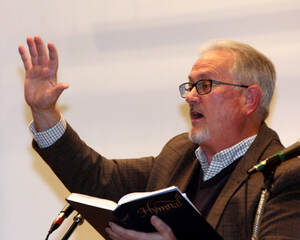
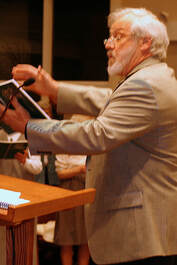
Harmonies Workshop, a music ministry directed by Glenn Lehman since 1992, concluded at the end of 2025. In its 33 years of making music, thousands of people came to its hymn sings and concerts. Beyond the core area of Lancaster, PA, thousands more have listened online. Many contributed musical gifts and financial support. 

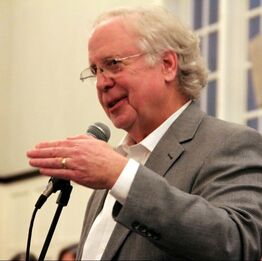
“Over the years, a community rose up to support this effort,” noted Lehman, "so this ending is filled with much gratitude." The Chair of the Board of Directors, Rhoda Denlinger, said that "even though it's ending, there are many echoes of our work that continue to bring peace to our hearts and to the world."

The nonprofit corporate entity, called Harmonies for short, began when the late Hiram Hershey, asked Glenn to write a song leaders manual for “song leaders who couldn’t use a pitch pipe.” You Can Lead Singing was published in 1996. They both went to 
Westminster Choir College, Princeton, NJ, where Lehman got his master's in church music.

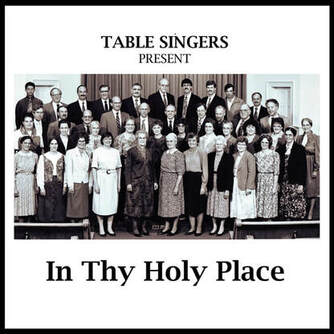
Two choirs led by Lehman soon became signature projects of Harmonies. The Table Singers, a 40-voice auditioned amateur choir (singers from DE, MD, and PA), musically explored six Scottdale-published Mennonite hymnals, from the first English-language hymnal, Church and Sunday School (1902) to Hymnal: A Worship Book (1992). Two early 20th century editors, J.D. Brunk and Walter Yoder, often inspired Lehman. A series of hymn concerts was added.

“We perfected the unaccompanied, live acoustics sound of that era,” said Lehman. “The secret ingredient was sounding like a practiced, confident congregation, poised but not polished.” He applied as much choral know-how and love of church history to Fanny Crosby’s “I Shall Know Him” (over a million listens on YouTube) as he brought to a Vivaldi Gloria with his Lancaster Chamber Singers. 
Table Singers, the name, harkens back to the historic practice of lead singers around a table in front of the pulpit when there was one.

The other group, the Foresingers, explored historic singing in Mennonite congregations long before singing schools and shaped notes had their impact in making tunes more punctuated and less liminal, and before Mennonite hymnals were printed with notes and in English. 

A musical spark for that venture was lit when Lehman attended a neighbor’s wedding and heard the solemnity and beauty of plain, non-metrical unison singing. He researched, arranged and transcribed slow, chant-like Amish tunes which became a reference for the similar but faster tunes shared by most other churches of that era in colonial America. Early meetinghouse architecture also inspired him.

With a semiprofessional ensemble of twelve voices, harp, and zither, the Foresingers took that musical, Menno Heirs, to colleges and historic sites such as the Detweiler Meetinghouse (Ontario), and Behalt (Ohio), and Germantown and Pendle Hill (both of Philadelphia). 

In addition to acting, costumes, and sets, the musical required Pennsylvania German scripts and a knowledge of worship practice in early settler congregations. “Through this work,” said Lehman, “I learned that, to enrich my spirit in mystery, I didn’t need a trip to a medieval monastery. I just went back 300 years and found that the sublimity was waiting for me.”

This group’s following was more intense among church music specialists and historians.
​The Foresingers adventure caught the attention of two PBS-related producers. David Grubin filmed some footage of the ensemble in the 1719 Herr House for his American Experience film. And Yale Roe’s Jerusalem 3000 included some of its music in his 1996 PBS special.

In Spring 2020, Lehman wrote “Finding and Singing Colonial Mennonite Tunes” for The Hymn (see pg 34.). The article summarized the research and experience of the Foresingers, how similar it was to contemporary music in most of the other American colonies, and suggesting that the singing schools probably hastened the ending of the non-metrical unison singing of folk chant. 

In addition to the Table Singers and Foresingers, the Harmonies structure, guided by its board of directors, made it possible to respond to various creative initiatives from individuals and congregations, such as children’s summer music camps, a CD of interest to tourists and students, Amish Music: from hymns to harmonica, JJ’s Monterey Fizz, and a commissioned bust of J.D. Brunk of both Virginia and Indiana. For many years on Christmas and Easter, Harmonies produced radio specials carried by two dozen stations.

Access to the music continues at www.harmonies.org.


Picture
Picture
Glenns Harmonies 
34 W Eby Rd
Leola, PA 17540
​[email protected]